Motorola Mobility is one of the most recognizable and influential brands in the world of mobile technology. Its history is a journey of innovation, revolutionary breakthroughs, and transformations that have significantly shaped the development of mobile communication and portable electronics worldwide. More at chicago1.one.
Founding of the Company
Motorola Mobility’s story begins with Motorola Inc., a company founded in Chicago in 1928 by brothers Paul and Joseph Galvin as the Galvin Manufacturing Corporation. Their first product, a power converter that allowed home radios to be powered by a car battery, brought them immediate market success. In the 1930s, the company introduced its first car radio and gave it the name Motorola—a blend of “motor” (for motorcar) and “ola” (as in “Victrola,” a popular record player brand at the time). This name eventually became the official name of the company.
In the following decades, Motorola Inc. grew rapidly, becoming one of the most influential manufacturers in radio communications, telecommunications equipment, televisions, microchips, and satellite systems. Its innovations were widely used in the military and space sectors. For example, Motorola developed the first portable two-way radio, the “Handie-Talkie,” for the U.S. Army during World War II. Space holds a special place in the company’s history: in 1969, during Neil Armstrong’s moon landing, it was Motorola’s radio equipment that transmitted his legendary words: “That’s one small step for a man, one giant leap for mankind.”
Mobile Phones
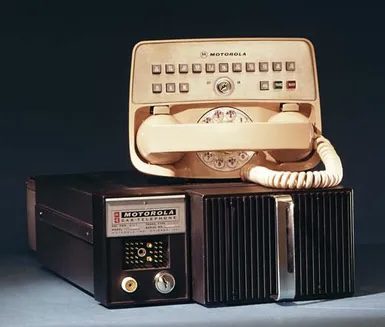
A true technological breakthrough came in 1983 when Motorola introduced the world’s first commercial mobile phone—the Motorola DynaTAC 8000X. The company spent over 15 years and more than $100 million developing the device, with engineer Martin Cooper, known as the “father of the cell phone,” as its chief architect.
The DynaTAC 8000X was massive by modern standards:
- Weighed about 800 grams (1.75 pounds);
- Offered 30 minutes of talk time;
- Required up to 10 hours to charge;
- Stored 30 phone numbers;
- Cost around $3,995.
In the 1990s, Motorola became a true pioneer of the mobile industry, releasing some of the most popular models of the era:
- MicroTAC: One of the first “flip phones,” which set a new standard for mobile design.
- StarTAC (1996): The world’s first clamshell mobile phone, which became a pop culture icon and was far ahead of its time.
- Motorola Pagers: Legendary pagers that dominated the personal communications market before the widespread adoption of SMS.
The Company Split
After decades of dominating the mobile technology landscape, Motorola Inc. underwent a major restructuring in 2011, splitting into two independent, publicly traded companies:
- Motorola Solutions: Focused on professional-grade equipment for corporate, security, and government clients, including radio communications, law enforcement software, emergency management systems, and enterprise telecommunications solutions.
- Motorola Mobility: Took over the development and sale of mobile phones, smartphones, tablets, digital accessories, and consumer electronics for the mass market.
This strategic split was driven by the need to adapt to a new era of digital technology. In the first decade of the 2000s, the mobile market changed radically. With the launch of the iPhone in 2007 and the rise of Android, companies operating on the old “traditional mobility” model began to lose ground. Motorola, once a symbol of innovation, found itself facing fierce competition and a declining market share.
After the split, Motorola Mobility was able to focus exclusively on the consumer market. This included a rapid smartphone development cycle, integrating new Android-friendly features, experimenting with design and materials, and expanding its presence in competitive markets like India, South America, and Southeast Asia, where flexibility was key.

The Google and Lenovo Era
In 2011, Google acquired Motorola Mobility for $12.5 billion, one of the decade’s most high-profile deals in the tech industry. The move was less about hardware and more about intellectual property: Google gained access to over 17,000 patents related to mobile technology, networking, and wireless communications. This was strategically crucial amid ongoing legal battles with Apple, Microsoft, and other players fighting for control over key mobile technologies.
The acquisition also gave Google a new opportunity: to create smartphones firsthand, without relying on third-party manufacturers. Although Motorola continued to operate as an independent brand, its devices were deeply integrated with Android and showcased Google’s vision for the ideal smartphone.
Under Google’s wing, Motorola introduced the Moto X—a smartphone focused not on technical specs, but on a smart user experience:
- Touchless voice control (thanks to “OK, Moto”);
- Appearance customization through the Moto Maker service;
- A clean version of Android without unnecessary bloatware.
The Moto X didn’t become a bestseller, but it earned praise from the market as an innovative, “human-centric” alternative to the iPhone and Samsung. However, the real hit was the Moto G line—budget-friendly smartphones with quality construction, a good camera, and a “pure” Android experience.
In January 2014, Google unexpectedly announced the sale of Motorola Mobility to the Chinese corporation Lenovo—one of the world’s largest PC manufacturers—for $2.91 billion. Although the amount was far less than the original purchase price, Google retained most of the patents, which had been the main goal of the acquisition all along. Lenovo focused on manufacturing efficiency, expansion in Asia, and strengthening its position in the U.S. and Europe. While Motorola lost its status as an innovative flagship, it maintained its image as a quality, reliable brand with a “clean” Android experience and consistent updates.
Innovations and Key Models
In 2016, Motorola introduced the Moto Z series, memorable for its modular approach to smartphones. Additional modules, called Moto Mods, could be magnetically attached to the phone’s body. These included a JBL portable speaker, a video projector, a Hasselblad camera module with optical zoom, a power bank, and a GamePad controller for mobile gaming. This approach allowed users to expand their smartphone’s functionality without buying a new device. The Moto Z became one of the most innovative smartphones in the world, although it remained a niche product due to the cost and limited selection of modules.
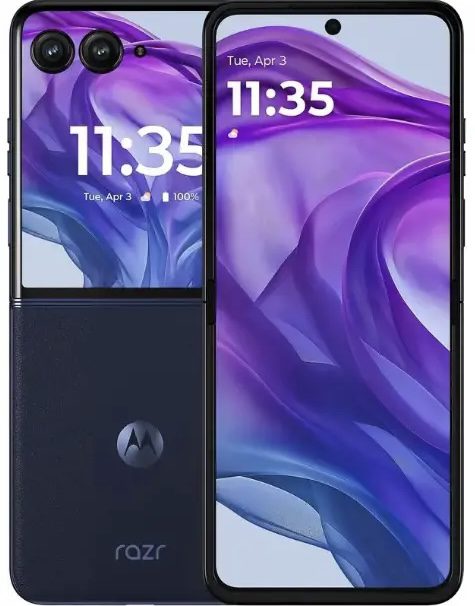
In 2019, Motorola stunned the market by unveiling an updated version of the iconic RAZR—this time as a foldable smartphone. The new device kept the stylish flip-phone design but featured a flexible OLED display on the inside that unfolded into a full-sized touchscreen. It also had an external screen for notifications. The RAZR was more than just a nod to nostalgia; it was an attempt to reimagine the future of the mobile form factor. Despite criticism of the first generation’s battery life and price, subsequent versions (2020, 2022, 2023) demonstrated technological progress and determination.