

Chicago has been the birthplace and home of many self-made millionaires. Unlike the old money families of New York who often inherited their fortunes, Chicago’s tycoons had to build their wealth from the ground up. Let’s take a closer look at some of the city’s richest people on chicago1.one.
Building a Business in Chicago
American writer F. Scott Fitzgerald once noted that wealthy people are different from the rest of us. They’re not just richer; they’re free to pursue their dreams without the constant worry of bills and the daily grind of survival. But with that freedom comes a different kind of burden—the constant fear of thieves and extortionists. It’s no surprise that this conflicting pressure can make them a bit eccentric.
The millionaires who made their fortunes between the Civil War and World War I were a unique breed. When you look at the lists of the richest people in old Chicago, most of them got their start in industries like meatpacking, manufacturing agricultural machinery and railroad cars, lumber milling, and steel rolling. Names like Armour, Swift, McCormick, and Pullman weren’t just building empires; they were building the city itself. Their legacies live on in the names of schools, institutes, museums, and parks they founded.
In this bustling city, the wealthy were known for their philanthropy. Some, like John G. Harvel and Joseph and Martin Ryerson, were locally famous. Others, like Richard Sears and Aaron Ward, gained national recognition. But the quintessential Chicago millionaire was someone who not only chose to stay close to the grimy, noisy sources of their wealth but also earned their fortune in their youth, tying their destiny to the city’s fate. As Carl Sandburg famously wrote, Chicago was a “stormy, husky, brawling, City of the Big Shoulders,” a place of pride for its butchers and toolmakers.
Philip Armour and His Meatpacking Empire
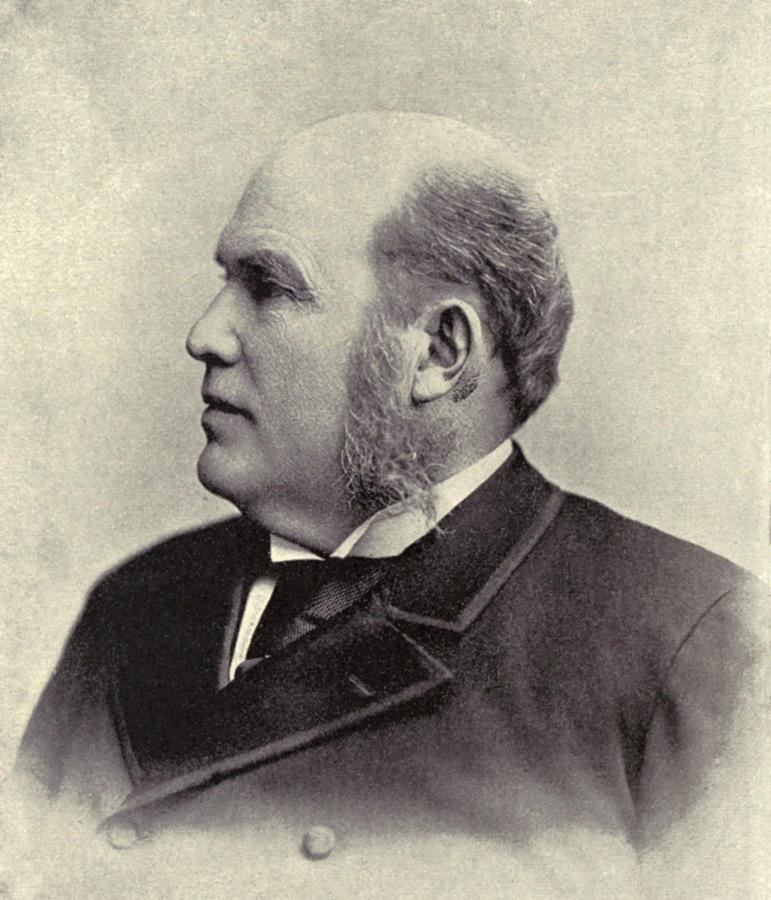
Philip Armour, a native of Chicago and one of eight children of a farmer, was a self-made man. At 19, he headed to California in 1852 to seek his fortune in the gold rush. He returned with a few thousand dollars, enough to start a wholesale food business. At the end of the Civil War, Armour made a bold move. Anticipating the fall of the Confederacy, he secured large contracts for future pork deliveries at a discounted price of $40 a barrel. Just as he predicted, when the war ended, the price plummeted to $18, and he pocketed a profit of $22 per barrel, making him a millionaire almost overnight.
Though he was living in Milwaukee at the time, Armour saw the writing on the wall. In 1875, he moved to Chicago, a clear railroad hub with a promising future in meat processing and transportation. He entered a competitive market with rivals like Gustavus Swift, but Armour was an innovator. He invested heavily in developing refrigerated rail cars that kept meat fresh on its journey. He also bought vast tracts of land on the city’s south side, creating a massive stockyard where thousands of animals were unloaded from trains and sent for slaughter.
Armour pushed his production managers to find new ways to use the by-products of the assembly-line slaughter. By 1893, his fortune was estimated at $50 million, and his plants employed 15,000 workers. He once told a friend, “I like to make money. I have no other interest in life but business.” Yet, he wasn’t afraid to give it away. During the Panic of 1893, when a banking crisis was imminent, people lined up at city banks to withdraw their savings. In a decisive moment, Armour stepped forward and announced that people could cash personal checks at his office. More than 1,000 people took him up on the offer, and his actions helped pull the bank back from the brink of collapse.
Armour was also a generous philanthropist, donating to several institutions and co-founding the Chicago Orchestral Association. His benevolence was as genuine as the public’s admiration for him. He passed away in 1901, leaving a remarkable legacy.
The Kingdom of Pullman
George Pullman, a New Yorker by birth, was a carpenter with a knack for invention and engineering. His first major triumph came shortly after he arrived in Chicago in 1857. The city’s main hotel, the Tremont House, was sinking. Pullman took on the audacious task of raising it. He dug trenches, surrounded the building with 4,800 jacks, and hired 1,200 workers. On pre-arranged signals, each worker simultaneously turned the handles of four jacks, and bit by bit, the hotel rose without disrupting its guests.
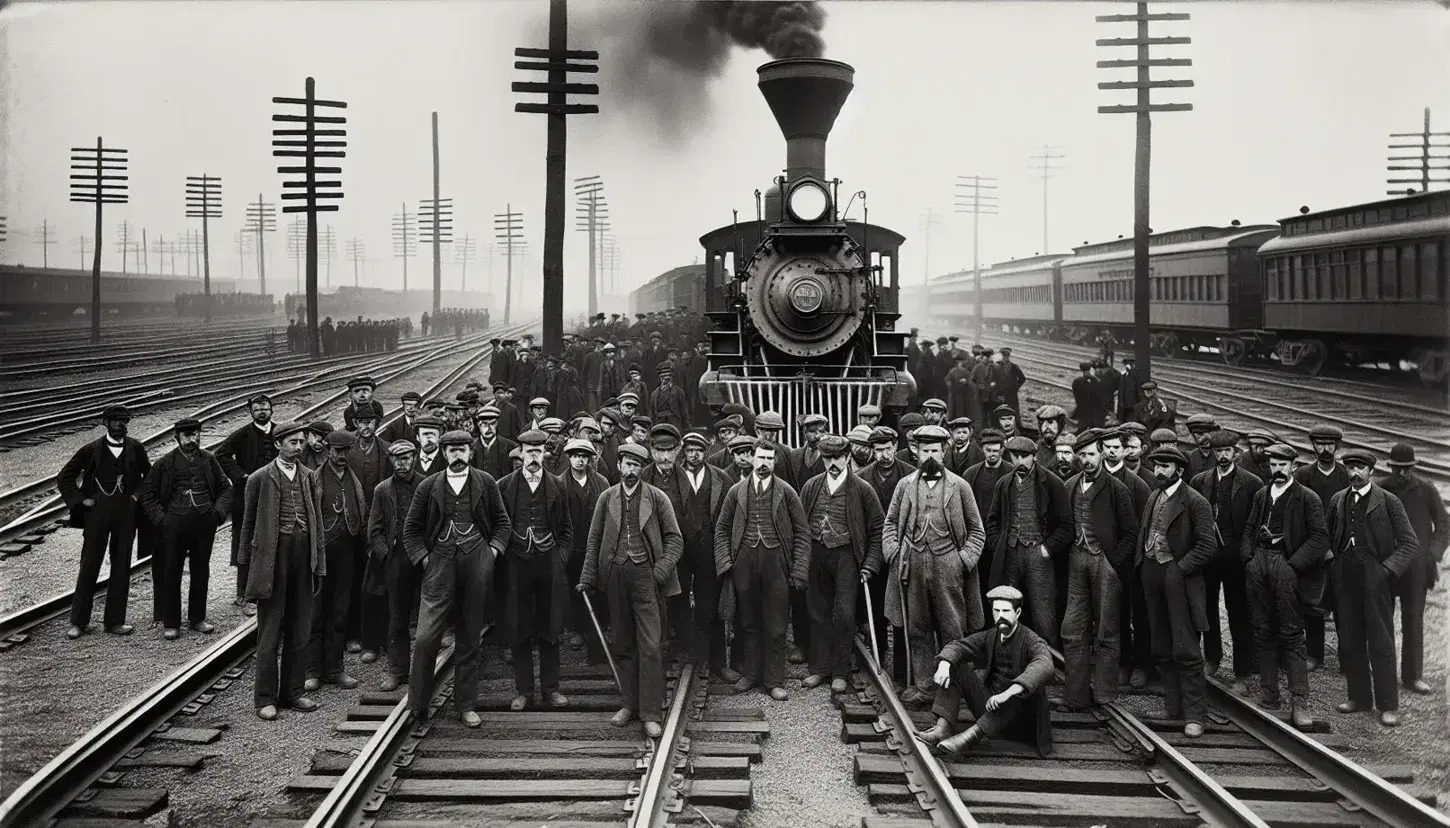
Soon, Pullman set his sights on creating a railroad car where passengers could both sit and sleep. With a business partner, he invented a system of facing seats and an upper berth that could be converted into a curtained sleeping space. By 1881, Pullman was a wealthy and famous man. His namesake cars crisscrossed the nation’s vast railway network. He owned several factories, including one in Chicago. When he died in 1897, he left his sons only their yearly income and a mere $3,000 each. To his wife, he bequeathed only the income from his fortune, which had dwindled to $7.5 million.
Chicago’s Real Estate Magnates: The Palmer Family
In 1867, Potter Palmer left his department store business to focus on real estate development in downtown Chicago. In 1871, he finished building the magnificent Palmer House hotel, a project he invested $3.5 million into. At forty-five, he had recently married Bertha Honoré, the daughter of a Chicago developer who was 23 years his junior. He presented the hotel to her as a wedding gift. Just 13 days after it opened, the hotel burned down in the Great Chicago Fire. Undeterred, Palmer built a new, even more luxurious hotel. The Palmer House quickly became one of the most famous in the country, and Palmer’s other ventures flourished.
His steady income allowed him to lavish his wife with gifts, including a diamond and pearl necklace with 2,268 pearls and 7 diamonds. The Palmers filled their luxurious home with paintings by French Impressionists, many of which are now displayed at the Art Institute of Chicago. Bertha soon became a skilled hostess and the head of the Board of Lady Managers. She even convinced Congress to allocate $200,000 for women’s and women’s labor exhibits. Potter Palmer passed away in 1902, having transformed State Street and Lake Shore Drive into commercial and residential hubs. After her husband’s death, Bertha stayed in Chicago until 1910 before moving to Sarasota, Florida. There, she became a real estate agent and advertiser, growing her inheritance to an estimated $15 million.
The Successful Merchant and Department Store Owner
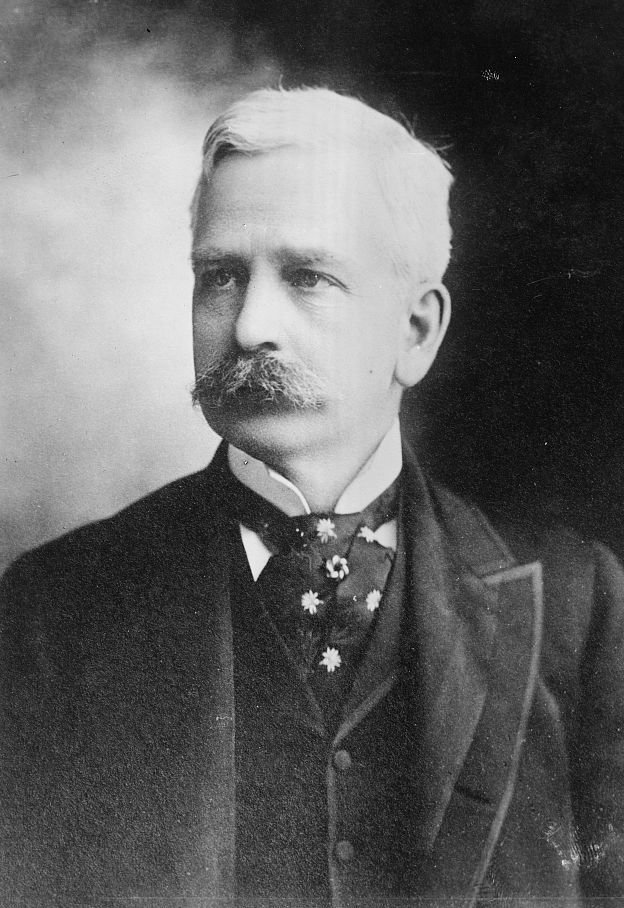
In 1856, Marshall Field moved to Chicago. He worked for a local merchant for $400 a year but had bigger ambitions. Determined to open his own business, he lived frugally, sleeping on a cot in the back of the store. After nine years, he had saved $30,000 and was ready to make his move.
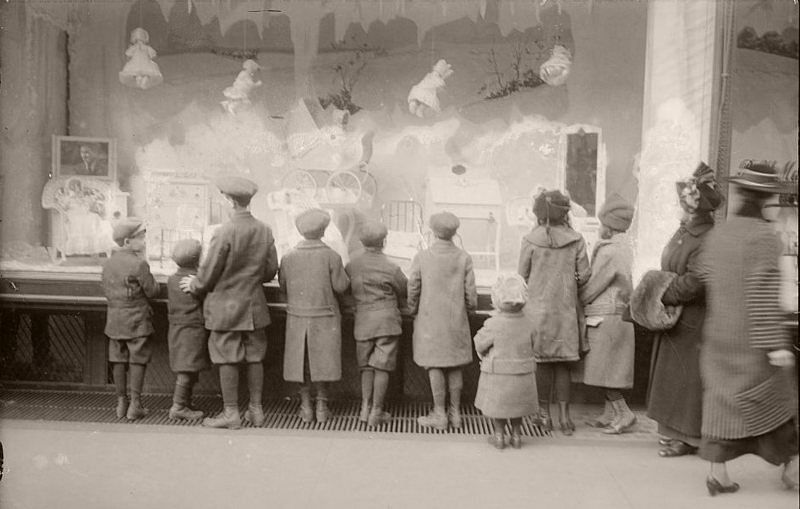
In 1865, he became partners with Potter Palmer and Levi Leiter. The three men knew that the retail world was changing. No longer were customers simply grabbing whatever was available from a newly arrived wagon. They needed to be won over. At their shop, the owner, dressed in a tailcoat, would greet visitors at the door. He memorized the names and preferences of wealthy clients, while large display windows attracted middle-class women. The money-back guarantee convinced skeptical men. Fair prices, a wide selection, and excellent service were all part of a new, democratic marketing strategy for a big city.
When Palmer moved into real estate in 1867, Field and Leiter continued the business. Fourteen years later, Field convinced Leiter to sell his share, and he took over completely. He moved his store to a new, more convenient location in the bustling heart of Chicago, a costly concession to customer convenience. He advertised widely and traveled the world to stock his shelves. Field is also credited with coining the famous slogan:”The customer is always right.” While he was helping to civilize a boisterous Chicago, his carefully managed personal fortune grew to a staggering $120 million.
After World War I, fortunes were still being made in Chicago, but on different terms. New laws, including income tax, made it more difficult for the wealthy to prosper in the same way they once did.