

Chicago boasts a wide range of libraries with various specializations and structures, but the Harold Washington Library holds a central place in the city’s system. Established in 1991, this cultural institution became the modern replacement for Chicago’s old central library, according to «chicago1.one».
Finding a Location for the New Central Library
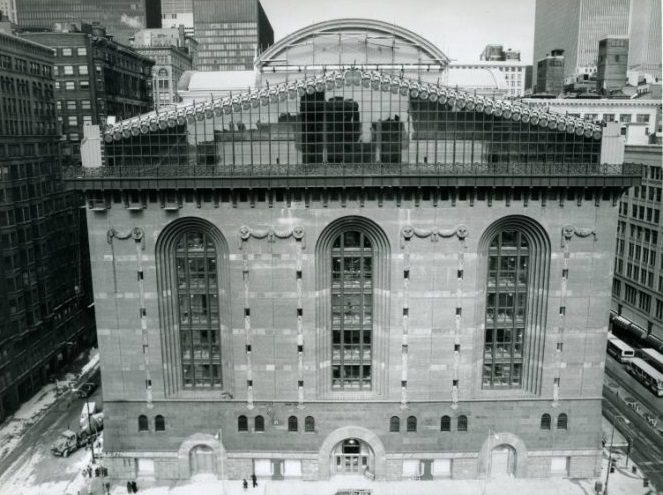
In the early 1980s, Chicago found itself without a primary city library. Local officials had a few options for the library’s new home, initially considering the former Goldblatt’s department store building. An article in the Chicago Tribune described this building as the best option since it eliminated construction costs.
In 1987, Chicago launched a competition for the best design for the new Central Library. The winning team would have the opportunity to create a modern cultural center to replace the outdated library facility.
The design competition faced criticism from local residents and cultural advocates, with the primary concern being that the process favored large firms, thus leaving small firms and independent designers with little chance of winning. However, city officials believed this competition format would ensure that the library was built on time and within budget.
The Winning Project
A panel of judges and the public narrowed the options to five finalists, ultimately awarding the contract to the SEBUS Group, led by architect Thomas Beeby. The firm’s design resembled a true library, while other entries appeared more like corporate office buildings of the time.
Through combined efforts, architects and builders raised $144 million to bring the Chicago Central Library to life. The Board of Directors decided to name the new library after Harold Washington, Chicago’s former mayor, who had passed away just a few years before the library’s opening. Mayor Washington, a passionate book lover, had been a strong supporter of the public library in Chicago.
The newly renovated Chicago Public Library officially opened its doors to visitors on October 7, 1991.
Architectural Style of the Chicago Central Library
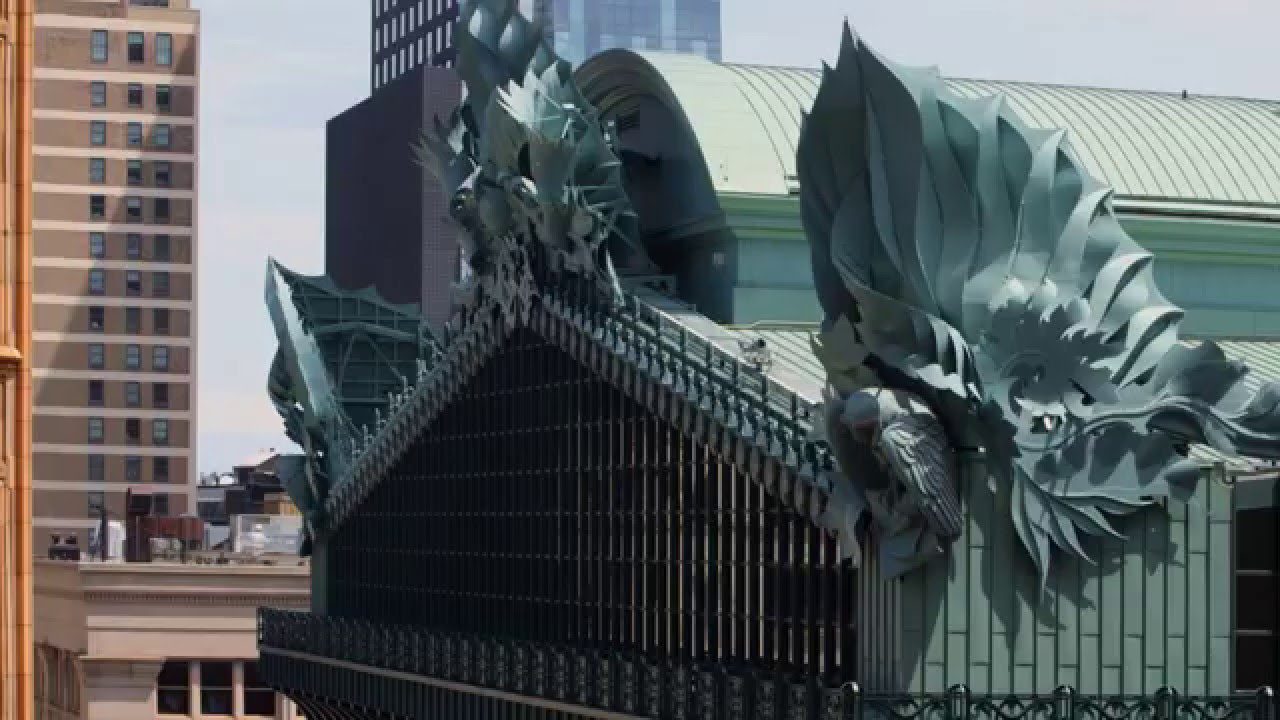
The Harold Washington Library building features intricate designs and figures, each with its symbolic meaning. The building’s style merges elements of late 20th-century American architecture with motifs reflecting Chicago’s history and cultural characteristics.
Classified as postmodern architecture, the library’s design emphasizes symbolic elements and figures. It’s adorned with vibrant iconography that offers insight into the city’s past.
The library’s roof is crowned with five massive owls, each positioned at a corner of the rooftop. These bird figures are further embellished with leaves and seed pods. The owls symbolize wisdom and knowledge.
Interestingly, the owls are designed in an assertive style, with a slightly tilted posture. One talon clutches an open book, while the other is raised as if poised to strike. A large owl, weighing around three tons, marks the library’s main entrance.
The building’s façade also features stone medallions. Half of these figures represent Chicago’s iconic cold northern wind, while the others, located on the second floor, depict Ceres, the Roman goddess of grain, symbolizing protection and prosperity for the city’s agricultural heritage.
The First African American Mayor for Whom Chicago’s Central Library Is Named
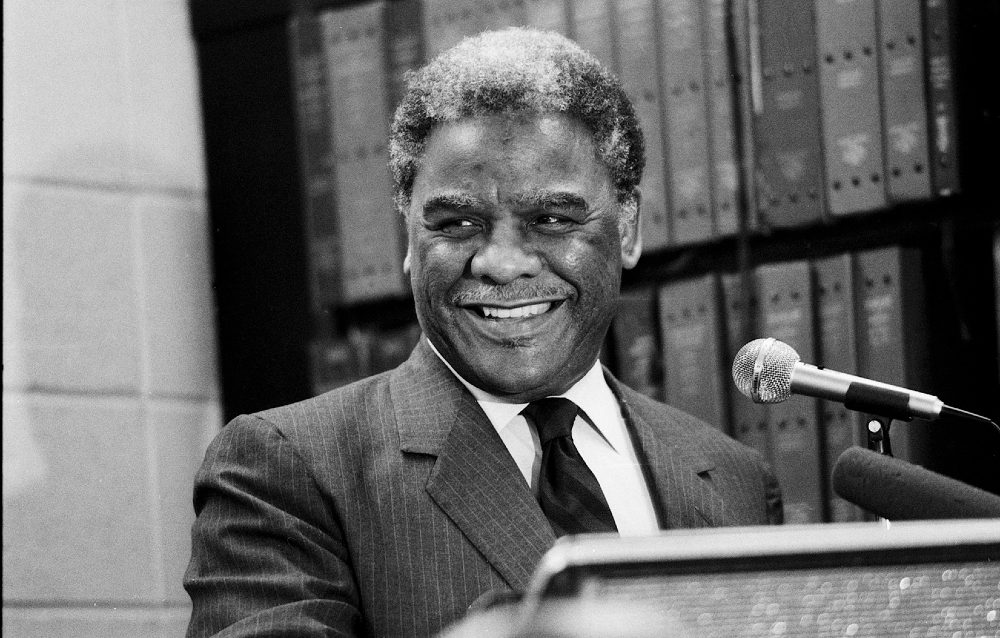
The library’s history is closely tied to renowned politician Harold Washington, who left an indelible mark on Chicago. From an early age, he pursued a political career with dedication.
After completing his education, Harold Washington worked as an assistant prosecutor and later served as an arbitrator for the Illinois Industrial Commission and as a state representative. In 1977, he was elected Illinois State Senator, and in 1981, he joined the House of Representatives.
In Congress, Washington was a strong advocate for minority rights. He championed the extension of the 1965 Voting Rights Act and increased funding for social programs.
In 1983, Harold Washington won the Chicago mayoral election, and in 1987, he was re-elected. During his tenure, he launched the Department of Environment.
Mayor Washington passed away from a heart attack in 1987, just months after his re-election. Thousands of Chicago residents gathered to pay their respects, forming an honor guard as his body was carried through the city.
Many buildings in Chicago bear his name, including the Harold Washington Public Library, Harold Washington College, the Harold Washington Cultural Center, and an elementary school.
Implementing Modern Technology in the Central Library
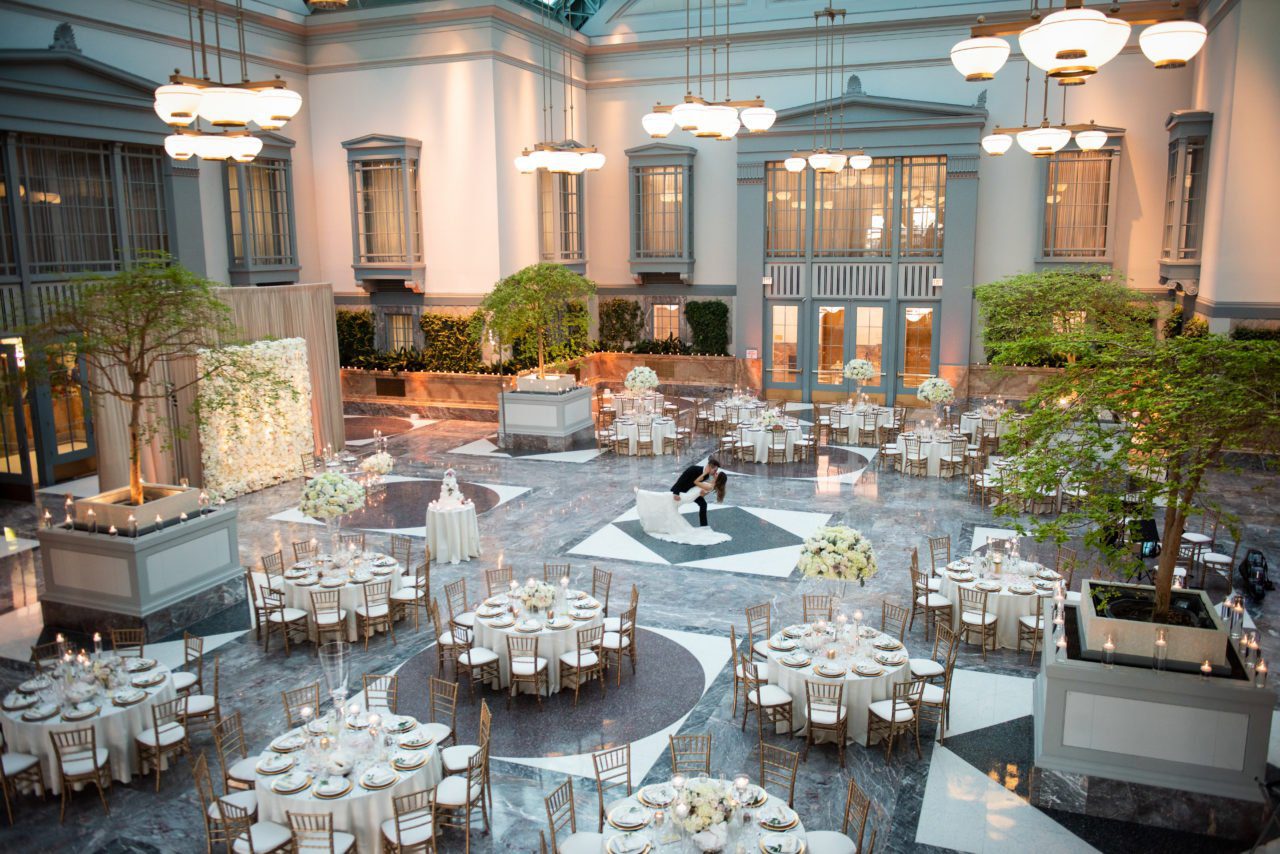
In the early 2000s, the city government invested an additional $44 million to build another library near the Central Library, with the vision of establishing a new and modern library in each Chicago neighborhood. The initiative aimed to improve the city’s infrastructure and expand library access.
Over time, the Central Library evolved from a place for reading various genres and academic literature into one of the city’s innovation hubs. For example, the library’s Maker Lab emerged as a pioneering public space dedicated to invention and learning.
The library became a center for knowledge-sharing, where residents could gather to exchange skills and experience in design and creation. Soon, the Chicago Public Library opened the Back of the Yards Branch within a local high school, offering a full range of services for teenagers and digital learning programs to support middle and high school students.
In 2014, the Chicago Public Library ranked first in the U.S. and third globally for service quality and its role in urban development. That same year, the library enhanced its online interface by launching a new website and updating its catalog.
During the COVID-19 pandemic, the Chicago Public Library temporarily closed for the first time since its founding due to virus-related concerns. However, even during the shutdown, the library continued to provide residents with access to online books and offered virtual homework assistance for students.
Upon reopening, the library introduced a new strategy, focusing on its role in providing factual and verified information to the public.
Notably, the opening of the library revitalized Chicago’s formerly neglected South State Street, transforming it into a lively area frequented by students from Roosevelt University, Columbia College, and Robert Morris College.
Earlier, we covered the John Crerar Library in Chicago, another prominent research library in the U.S. housing extensive collections in medicine, biology, physics, and general science. Although privately owned, the Crerar Library is open to anyone seeking to deepen their scientific knowledge.