

In 1828, a significant event occurred in Chicago’s history: the town elected its first constable. Two years later, Cook County followed suit and held a sheriff’s election. These law enforcement officers worked part-time and did not patrol. If a citizen suffered at the hands of criminals, they had to go to court to obtain a warrant, and the constable or sheriff would then execute the warrant for a fee. In 1839, a night watch was introduced, overseen by the City Marshal. By 1853, Chicago had nine daytime police officers who mainly controlled vehicle traffic on the bridges, writes chicago1.one.
Creating a Centralized Police Force
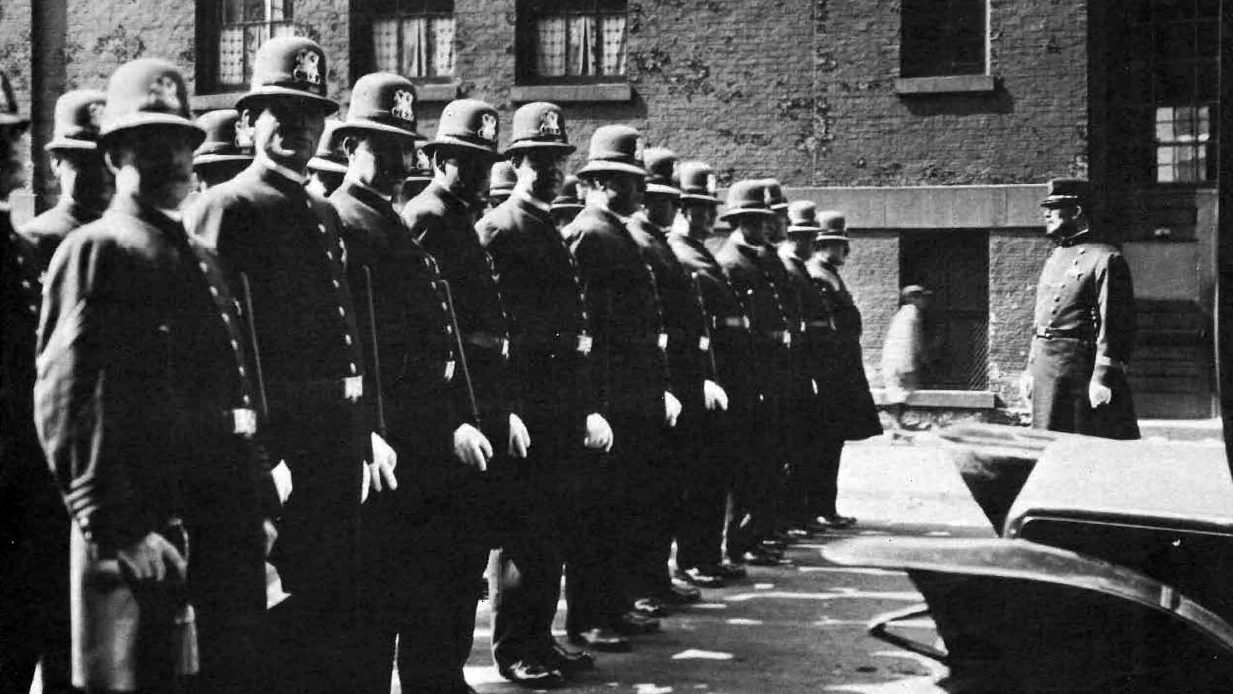
The initial decentralized, reactive policing system was wary of a despotic government and actively cooperated with merchants and influential citizens. However, disturbances in the city were becoming very dangerous. Commercial and industrial progress made it increasingly difficult to combat hooliganism, drunkenness, and violence, as well as to control and suppress riots in a class-divided society.
The impetus for creating a centralized, bureaucratic police force was the election victory of the “Know-Nothing” party. They raised licensing fees on saloons and provoked the “Lager Beer Riot” in 1855, when crowds of Germans and Irish bravely fought the existing police and militia.
Due to the situation, the City Council quickly created the Chicago Police Department (CPD), divided into three precincts and led by Cyrus Bradley. It consisted of 80 native-born residents. Modeled after the London and New York police forces, the new CPD worked full-time, patrolling day and night. Their duties included enforcing liquor laws. In 1858, police officers began wearing a special uniform and were considered distinguished representatives of state authority.
The Duties of Early Police Officers
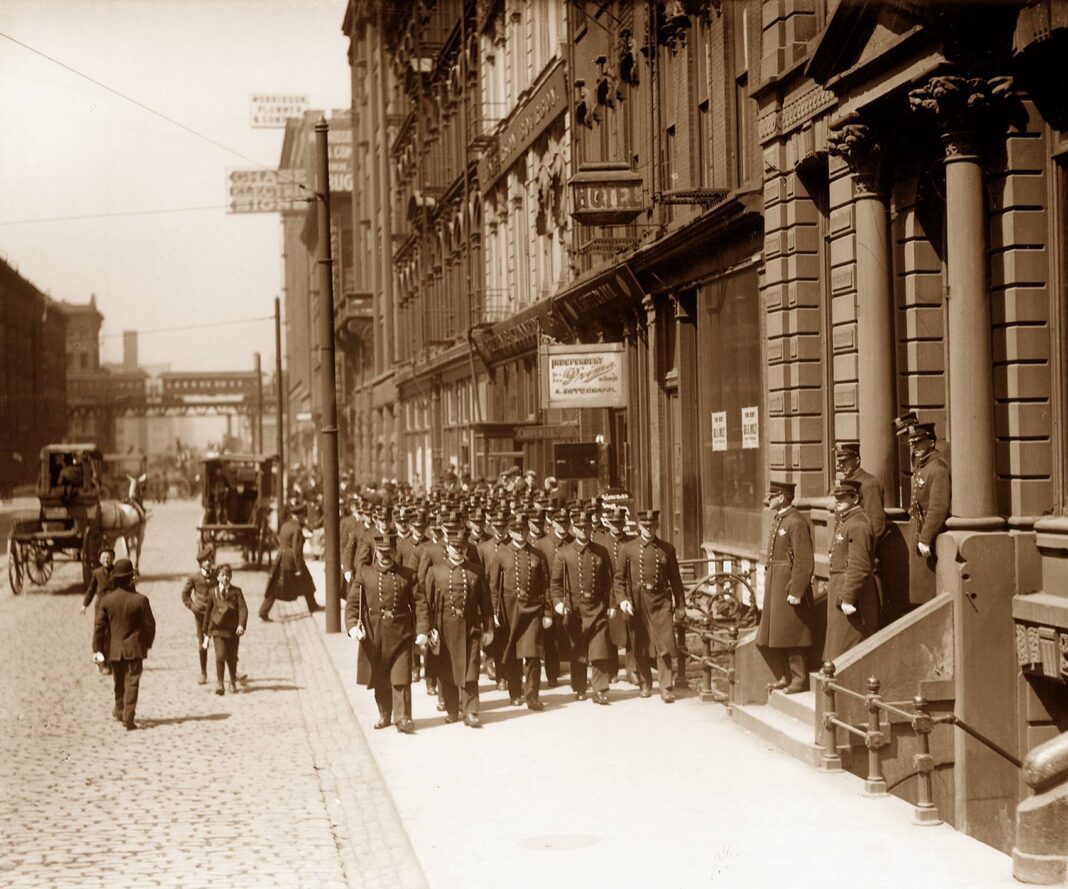
After police duties were redefined by the authorities, officers began arresting thousands of drunks, vagrants, and other disturbers of the peace. Citizens feared and respected the police. Often, the mere sight of the uniform was enough to clear the streets of beggars and children. Officers frequently used batons in their work. They were quick to deal with arrestees, shoving, dragging, and transporting them by wagon to the precinct. Notably, the first patrol wagon, which facilitated arrests, appeared in 1881.
While citizens often ignored laws, the police skillfully settled street brawls and harshly punished offenders. Officers were also instructed to regulate the operation of city saloons and suppress vice. However, patrolmen were not afraid to take bribes, which led to high-profile corruption scandals when it came to the attention of the authorities.
As soon as strikes and disturbances began, patrol officers were reorganized into large military formations that used batons to disperse the crowds. Combating crime and violence was only one of the police’s many tasks. They also controlled traffic on bridges, helped pedestrians cross streets, and returned lost children. Thousands of homeless people slept overnight at police stations every year. As a result, the murder rate in Chicago was low, and serious crimes were rare.
Initially, the mayor and City Council personally appointed officials, but in 1861, commissioners (superintendents) took over. Decentralization soon began, allowing police to respond to local residents’ concerns, but officers did so for a fee; corruption dictated which problems received the most attention.
Political connections played a vital role in joining the police force. Starting in 1856, the department saw many recruits of foreign origin, especially the unskilled. It is important to note that African American police officers primarily served in Black neighborhoods.
Education and Work Specifics
In 1885, women joined the police force as matrons who cared for female prisoners. They were officially appointed to police positions starting in 1913 to work with convicts and their children. In 1895, Chicago adopted a civil service procedure, and written tests became the basis for hiring and promotion.
Before working at a precinct, police officers underwent training. On average, they patrolled 63 hours a week, with most of that being night patrol, and spent another 49 hours on reserve duty in the precinct building in case of emergencies. Despite everything, police officers earned a higher salary than most workers in other professions. A police pension system began operating in 1887.
In 1880, the Chicago police were the first to adopt the “signal” service, which combined the telegraph and telephone, allowing patrolmen in their districts to call for an ambulance or a patrol wagon. They also reported their location every hour, confirming they were on duty. The practice of preventive patrolling did not prove justified, but the number of arrests decreased, and order was restored on the streets.
With the expansion of the city, over 200 suburban police officers joined the Chicago Police Department, which soon built seven new precincts.
Police in the 20th Century
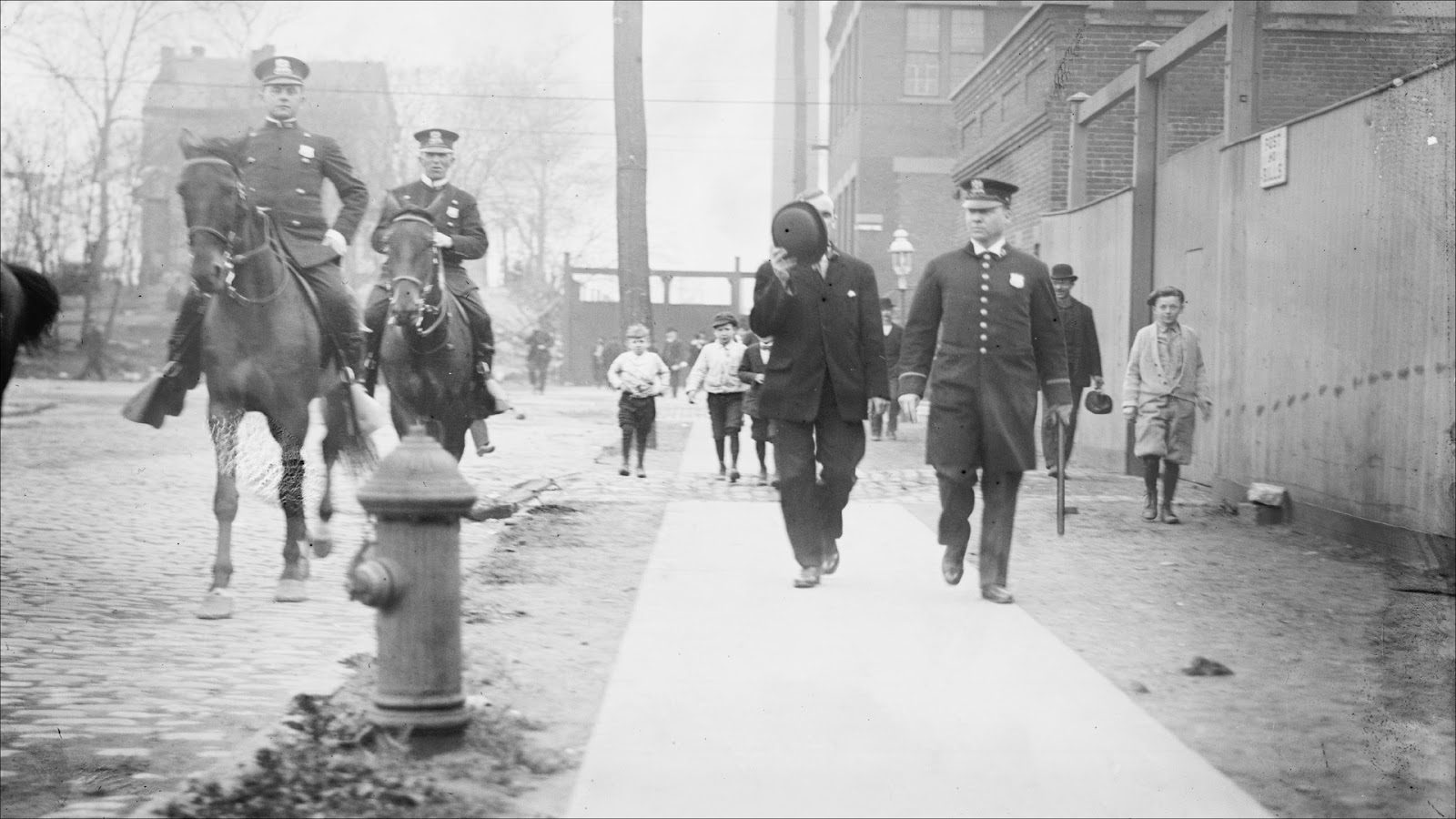
The early 20th century saw a battle against prostitution, corruption, and various disturbances, forcing the police to take strict measures in urban areas. However, these efforts failed to overcome corruption and proved ineffective in making arrests in gang-related murder cases. A new administration tried to suppress bootlegging starting in 1923, but the murder rate only increased.
In 1929, the Chicago Police Department, in conjunction with Northwestern University, established a criminal laboratory, which marked a notable improvement in scientific policing. Formal police education, which began with the creation of the Police Academy in 1910, was extended from four weeks to three months of training.
In 1906, a mounted unit was organized in Chicago to control traffic, and by 1915, the police used motorcycles to pursue offenders. In the mid-1910s, police began issuing fines for traffic violations rather than making arrests, as was the previous practice.
The 1930s were not the best time for the police. Officers’ salaries were reduced, and the work schedule was simplified. This was due to the reserve service being cut and later eliminated altogether. In 1931, police officers worked 48 hours a week and had 15 days of vacation per year. By the 1960s, the work week was 40 hours.
The reforms of the 20th century, notably, created unexpected problems. The introduction of new technologies, patrol methods, centralization, and the elimination of political influence isolated the police from urban communities. In 1992, the Police Department announced an alternative operational strategy aimed at bringing officers closer to citizens, returning decision-making to the district level, and encouraging patrol initiative. Community policing overturned decades of reformist thinking.
Post-war urban sprawl generated hundreds of suburban police departments that patrolled unincorporated territories and assisted local police. Federal law enforcement agencies, especially the FBI, also expanded their role, fighting criminal organizations, drug traffickers, and corrupt public officials.