

Despite advancements and technological progress, the level of education among women in 19th-century Chicago remained relatively low. Only 16 percent of women in the city were engaged in various professions, with most working in Chicago’s schools, according to «chicago1.one».
Social Women’s Clubs and Their Impact on Education Development
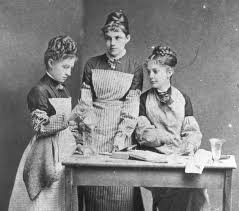
In the early 1900s, various social reading and art clubs for women became popular in Chicago. In 1894, the Illinois Federation of Women’s Clubs was established, with its primary mission being to ensure access to books for all residents of Chicago and other cities in Illinois.
With the Federation’s support, small mobile libraries were set up to reach even the most remote communities. Many women in Chicago were not involved in education because they were focused on fighting poverty and social degradation.
The Opening of Industrial Schools
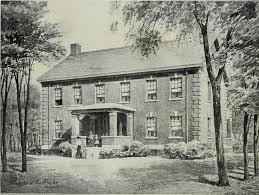
In the 19th century, industrial schools began to open in Chicago, modeled after English educational institutions. These schools provided girls from impoverished families with training in sewing and household management.
The schools instilled values such as love for home, family, and household responsibilities. Industrial schools helped transform girls from poor backgrounds into respected members of society.
Most students in Chicago’s industrial schools were girls and women from rural areas or immigrant backgrounds. Initially, these schools were opened in charitable institutions such as orphanages and veteran homes.
The schools operated in two formats: boarding schools, where children both studied and lived, and day schools, where students attended classes and were provided with meals. Many industrial schools in Chicago accepted both boys and girls, offering training in carpentry and tailoring.
Industrial schools in Illinois primarily prepared girls to work as domestic servants in the homes of wealthy residents. Students learned the basics of cooking, home management, and sewing.
Reformers believed that industrial work was too dangerous for women, so they advocated for careers as maids or cooks instead. Sewing classes taught girls to mend clothing for household use rather than for sale in stores.
Association of Women’s Industrial Schools
Over time, the network of industrial schools evolved into an Association that became a powerful force for promoting women’s rights in Illinois. At the initiative of the head of the Women’s Industrial Schools Association, the “Industrial Schools for Girls Act” was passed in 1879. This legislation mandated that counties provide $10 per student, covering expenses for food, transportation, and clothing.
In the 1880s, the role of industrial schools began to shift: increasingly, girls were referred to these institutions not by concerned locals or teachers but by official court representatives.
Educational reformers insisted that public schools should prepare girls for work as sales clerks, seamstresses, and stenographers, in addition to equipping them for household duties.
Local officials and reformers actively implemented programs for immigrant and native Chicago girls, many of whom left school to take on household responsibilities.
Teachers in industrial schools developed specialized programs to prepare girls of different ages for household work. These programs were later adapted for use in public schools. For example, ten-year-old girls were taught the basics of cooking and gardening.
Children as young as three were introduced to household tasks in a playful way, using role-playing activities to set tables, serve imaginary food, and sweep rooms.
Catholic Industrial Schools
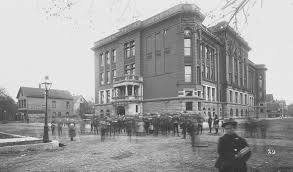
A distinct category of educational institutions in 19th-century Chicago was the Catholic industrial school. These schools followed a daily schedule similar to other industrial schools. Every morning, girls aged eight to eighteen studied the Bible.
Later in the day, they attended classes in reading, writing, and mathematics. Afternoons were dedicated to practical subjects such as cooking, laundry, embroidery, and sewing. The school day concluded with an afternoon prayer.
Catholic schools also included patriotism lessons for immigrant girls, incorporating American civic education. Notably, these schools were generally more welcoming to African American students than Protestant institutions.
In the late 1800s, the Sisters of the Good Shepherd founded the Chicago Industrial School for Girls in Lincoln Park, open to all girls regardless of nationality, religion, or race.
The Catholic nuns diverged from the prevailing belief that girls should only do domestic work or serve as maids. Instead, they encouraged girls to independently pursue education and seek paid employment.
Jane Addams and Hull House
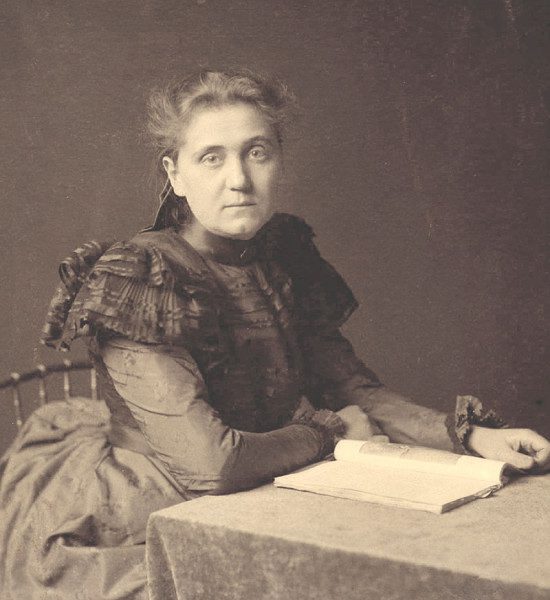
Social reformer and sociologist Jane Addams left a lasting impact on Chicago’s history. Born in 1860 in Cedarville, Illinois, Jane Addams was one of the few women of her time to receive an education, graduating successfully from Rockford Female Seminary.
Addams, who came from a wealthy family, was inspired by a settlement house for the poor she saw in London during her travels in Europe. Alongside her friend Ellen Starr, she decided to establish a similar institution in Chicago.
The women purchased a mansion on the city’s west side, an area populated mainly by immigrants, and named it Hull House. In this social center, middle-class residents offered assistance to women and children who had recently arrived in the United States, helping them find jobs and housing.
Hull House gained popularity over the years and, within two decades, evolved into a large complex with schools, theaters, cafes, childcare facilities, and art studios. Similar settlement houses soon appeared in many cities across the country.
Jane Addams frequently lectured on the lives of the impoverished. She documented her experiences in “Twenty Years at Hull House” and dedicated her life to advocating for better working conditions and voting rights for vulnerable women.
For her social contributions, Jane Addams was named the “most famous American woman of the 20th century.” In 1931, she was awarded the Nobel Peace Prize after being nominated 91 times.
Many influential Illinois women were involved with Hull House, including Julia Lathrop, who authored the world’s first juvenile justice law and later led the Federal Children’s Bureau. Another Hull House alumna, Florence Kelley, became Illinois’s first female factory inspector.
Even at the start of the 20th century, women’s rights in Chicago had yet to reach full equality. However, the collective efforts of prominent Chicago reformers in the late 1800s laid the groundwork for further advancements in women’s rights.